Sharing Thai Culture and Nature in a Meaningful and Responsible Way Since 1990.
Welcome to All Thailand Experiences -- The Thai New Year, or "Songkran" festival, is the largest water fight on the planet.
However, it is much more than that to the Thai people. Here are the events of the Thai new year that we enjoy each year.
Washing the hands of elders
Songkran, or the Thai New Year, is still the most important of all the Thai festivals and holidays.We usually have loads of friends from other countries to our home and we love to have them participate in all the
traditional activities with us. Although we are not Buddhists we love to go to the temples to watch the activities,
eat, drink, throw water and just have fun. Each year, the four-day celebration of Songkran consists of many activities,
and these are briefly explained below.
April 12 is Wan Sungkharn Lohng. This is a day for house cleaning and general
preparation for the New Year. In the evening it is traditional for Thais to dress up as a signal of the coming new year.
In Chiangmai, the Songkran procession is held on this day. This is a parade through Chiangmai comprised of Buddha
images and attendants on floats, which are accompanied by minstrels and the town's people. Here is the streaming video of the
Songkran Parade and waterfights.
Today we load up the pickup truck with 50-gallon drums filled with water. After the parade we go to the ice house
for a large block of ice to put in the water barrel. We then travel around the city joining others in the largest
water fight on the planet.
Time for the water fight
Students join
in the fun
April 13 is Wan Nao. On this day people prepare cooked meals and preserved food for the Buddhist merit-making that takes
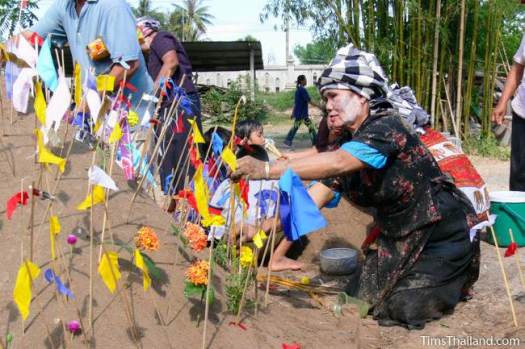
place on the following day. Activities at Wat Prasingh templecontinue on this day and in the evening local residents go to the banks of the Mae Ping River
and gather sand to be deposited in piles topped by flowers in the temples. This practice is the ancient "raising the temple
grounds" ritual, which was necessary in the old days because then Thai New Year was held at the end of the rainy season in
the first month of the old Thai Lunar Calendar.
April 14 is Wan Payawan. On this day a grand new year begins with early morning merit-making at the temples. Preserved and cooked
foods, fresh fruit, monks' robes and other offerings are made at the temples. In the home, people do the final cleaning of Buddha
images using scented water. Traditionally this is the day that the pouring of water begins. It was once the practice to pour gently,
but the fun-loving Thais have transposed this into a relative water free-for-all.
April 15 is Wan Parg-bpee. On this day homage is paid to ancestors, elders and other persons deserving respect because of age of
position. This is called 'Rohd Nam Songkran', meaning 'The Pouring of Songkran Water', and the water is sprinkled on the elder persons
while uttering wishes of good luck and a happy future.
In Chiangmai, this is the final day of the celebration and the day on which people have built up to a crescendo of water throwing.
It is the day when all family and religious obligations have been completed and the people are totally dedicated to having fun.
When you are ready
to reserve your accommodations and festival tour or design your own excursion,
fill out the Custom Excursion Request form or
contact us directly at
allthai@all-thailand-exp.com Please
include when you plan to be in Thailand, how many persons in your
party and type of room you prefer (single, double, tripple, or twin).